


Built for distance

Ship reliably—trust our leading ocean freight services

Ocean freight capabilities built for global trade

Reliable capacity

Reliable capacity

Access capacity commitments across key trade lanes through disciplined allocation management and strong carrier relationships.

Actionable insights

Actionable insight

Use market data, trade lane trends, and your own shipment history to uncover opportunities and make informed shipping decisions.

Local expertise

Local expertise

Work with teams that understand origin and destination markets and are backed by regional carrier relationships across our global network.

Adaptive planning

Adaptive planning

Adjust routing, carriers, and modes dynamically with tools and solutions designed for volatile global shipping environments.

Ocean shipping options for all cargo

Full container load (FCL)

Full container load (FCL)

Move larger shipments with dedicated container capacity, greater control, and fewer handling touchpoints from origin to destination.
Less than container load (LCL)

Less than container load (LCL)

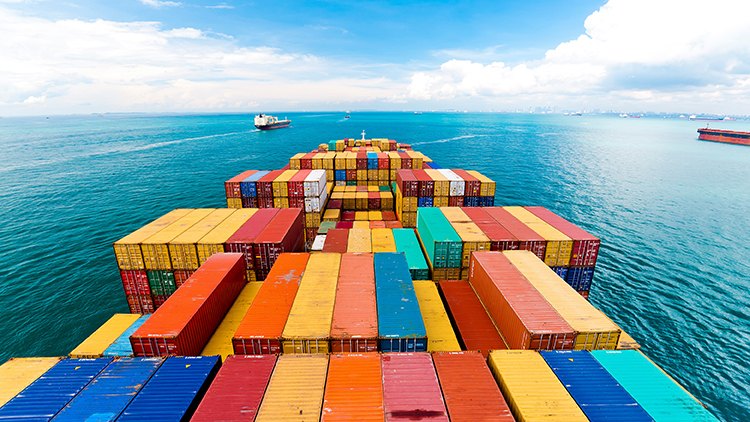
Ship smaller volumes without paying for a full container with LCL services at major ports to ensure your sea freight deadlines are met.
Explore LCL services

Buyer's consolidation

Buyer's consolidation

Increase your capacity options—we’ll combine and palletize your cargo with different manufacturers and load it into dedicated containers.
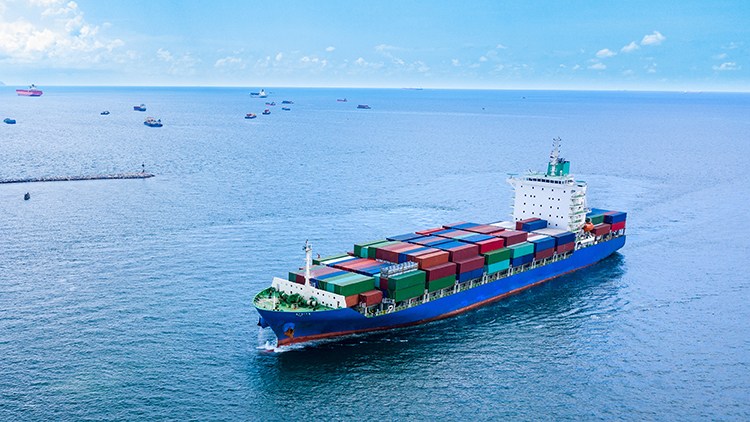
Coastal shipping

Coastal shipping

Save up to 60% from your overall transportation budget with domestic coastal shipping in Australia. It’s your natural choice over air, road, or rail service.
Explore coastal shipping

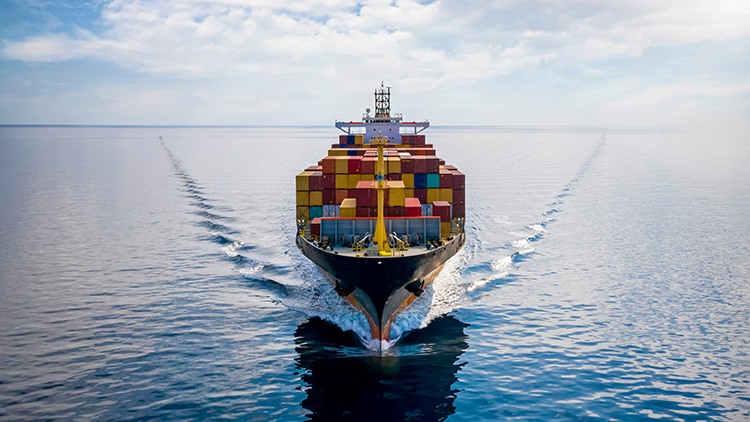
Expedited LCL

Expedited LCL

Achieve faster ocean transit times for needed products—even when your ocean freight doesn’t fill a full shipping container.
Explore expedited LCL

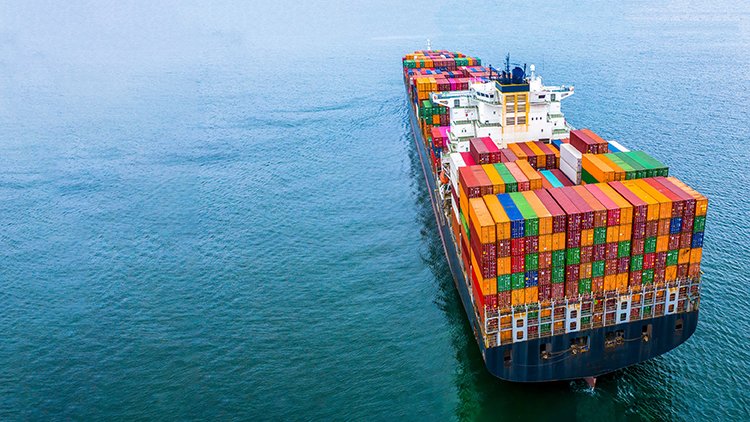
Expedited FCL Services TAWB

Expedited FCL Services TAWB

Quickly move along the Trans-Atlantic Westbound (TAWB) lane—from major ports in Europe to the United States.
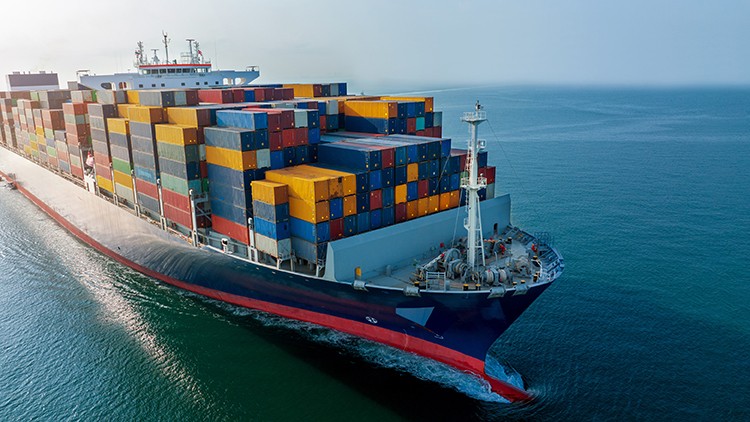
Expedited FCL Services TPEB

Expedited FCL Services TPEB

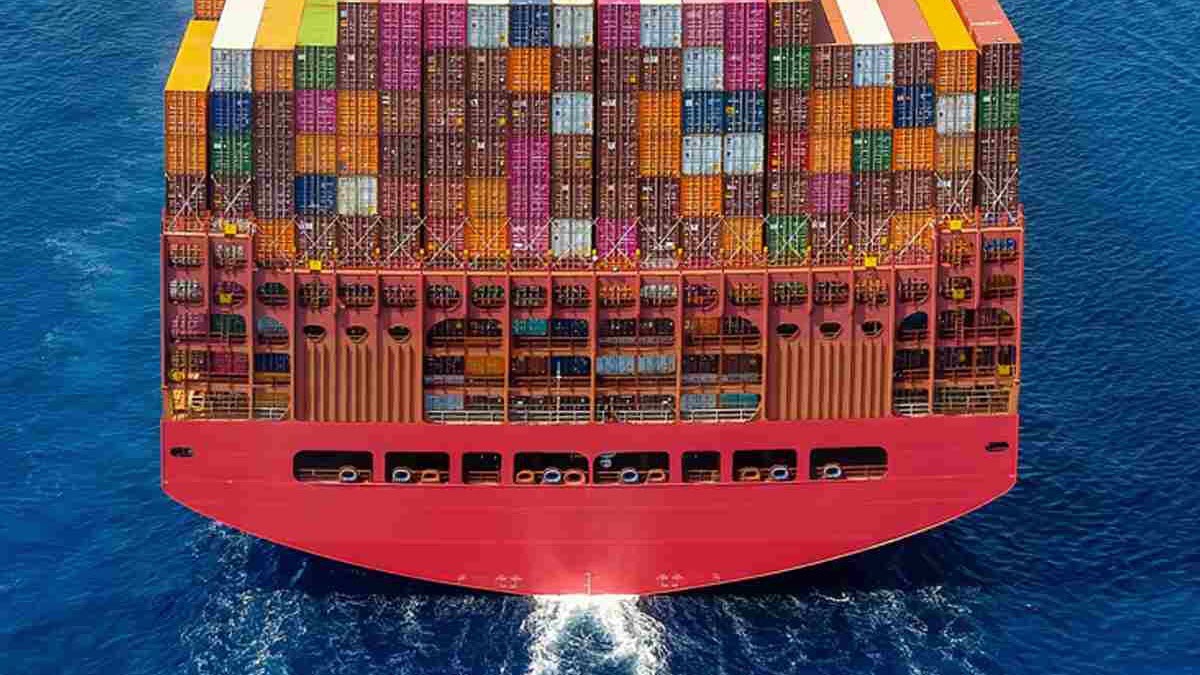
Deliver cargo from Asia to the United States on the Trans-Pacific Eastbound (TPEB) lane via one of the fastest ocean services.
Explore expedited TPEB

Marine cargo insurance

Marine cargo insurance

Explore all-risk policies—transactional and annual—to ensure cargo insurance matches exposure risk. Options vary by region.

Explore cargo insurance

Expand your ocean shipping options

Whether you have enough freight to fill an ocean container or only want to pay for the space you use, our full container load (FCL) and less than container load (LCL) freight services and relationships with top steamship lines cover all the angles.

What sets C.H. Robinson ocean freight services apart

Ribbon icon

Unmatched Expertise

Plan for fluctuating market demand with help from our sea freight experts, who will troubleshoot in real time, across time zones.

Globe icon

Unrivaled Scale

Secure capacity from a leading forwarder of ocean freight from China to the U.S. in the Trans-Pacific Eastbound (TPEB) trade lane.

Hand with star icon

Tailored Solutions

Reduce your need for multiple providers with our global services—from ocean, air, and customs to surface transportation.

Top 5
Global NVOCC
240
Global Offices
1.2M
TEUs Shipped Annually

Not all providers deliver the same value

C.H. Robinson Edge Report

Ocean capacity remains available, but reliability is uneven

Published: Thursday, October 01, 2026 | 09:00 AM CDT

Get our planning tips for October ocean freight
Ocean strategies for your industry

Frequently asked questions

Overview

Q: What is sea freight shipping?

Sea freight shipping, also known as ocean freight, is the transportation of goods across the ocean by cargo ships. It involves loading cargo (often in standardized shipping containers) onto large vessels that sail between ports. Ocean freight shipping is known for being: 

  • Cost effective for bulk goods: Ships can carry thousands of tons, so the cost per unit (per kilogram or cubic meter) is much lower than other modes for long-distance shipments. For example, ocean freight might cost around $0.50 per kg versus $4–6 per kg by air.
  • Ideal for high capacity: A single container ship can move enormous volumes—roughly 90% of world trade travels by sea—making it ideal for heavy or oversized cargo that can’t go by air.
  • A slower transit option: Ocean freight is slower than air freight (often taking several weeks for intercontinental shipments), so it’s best for non-urgent goods where low cost is a higher priority than speed.

Q: What are the benefits of sea freight shipping?

Sea freight offers several advantages for global shippers, primarily centered on cost and capacity. It is generally the most budget-friendly option for international transport, especially for large shipments.

  • Low shipping costs: Ocean freight typically has the lowest cost per pound or cubic foot. Shipping by sea is widely known as a cost-effective solution for moving goods internationally.
  • Large shipping volumes: With ocean shipping it’s possible to transport full containers of goods (or even entire industrial machines) in one shipment. This high capacity means you can move bulk cargo or oversized items that would be impractical by air.
  • Extensive global reach: Sea freight connects virtually every continent via global port networks. Even landlocked areas can be served through multimodal connections, making ocean shipping a backbone of global trade logistics.
  • Eco-efficient option: Per ton of cargo, ocean shipping has a far lower carbon footprint than air or truck. Cargo ships only emit about 10–40 grams of CO₂ per ton-kilometer, compared to roughly 500 grams by air, making sea freight a more sustainable choice for the environment.

Q: Is sea freight a sustainable mode of transport?

Yes. Sea freight is considered one of the most sustainable freight transport modes for long distances. Ships emit only a fraction of the CO₂ per ton-kilometer compared to trucks or planes, thanks to economies of scale.

  • Lower carbon footprint: Ocean vessels move massive amounts of cargo with relatively low emissions. For the same distance, air freight can produce 20–50 times more CO₂ per ton than ocean freight. This means shipping by sea greatly reduces greenhouse gas emissions for heavy shipments.
  • Efficiencies of scale: A single container ship can carry thousands of containers in one voyage. By maximizing cargo per trip, fuel use and emissions per unit of cargo stay low.
  • Greener initiatives: The industry is further improving sustainability by adopting cleaner fuels (e.g., low-sulfur fuel, LNG) and more efficient ship designs. Many carriers (e.g., via sustainable marine fuel programs) are also investing in carbon reduction measures to make ocean freight even more eco-friendly.

Sea service options

Q: What is FCL shipping?

Full container load (FCL) shipping means your cargo occupies an entire shipping container by itself. In FCL, a 20-ft or 40-ft container is filled by one shipper’s goods exclusively, not shared with others as experienced with less than container load (LCL) shipping.

  • Exclusive use of a container: Your freight is the only cargo in the container. This reduces handling and keeps the shipment sealed from origin to destination, enhancing security.
  • Best for large shipments: FCL is ideal when you have enough cargo to fill most or all of a container. It often becomes more economical at scale, as the cost per unit is lower if you can utilize a full container’s capacity.
  • Faster transit with less handling: Since no consolidation is needed, FCL shipments typically move directly and can have shorter transit times (and fewer touchpoints) than comparable LCL shipments.

Q: What is LCL shipping?

Less than container load (LCL) shipping means your goods share a container with other shippers’ cargo. If you don’t have enough volume for a full container load (FCL), an LCL shipment lets you pay only for the space you use while the freight forwarder consolidates multiple shipments in one container.

  • Shared container service: Your shipment is combined with others in a single container, so you split the container space and cost. Each shipper pays for their cargo’s volume, making it budget-friendly for smaller loads.
  • Cost-efficient for small volumes: LCL allows you to access low ocean freight rates without needing high volume. Instead of waiting until you can fill a whole container, you can ship 1–2 pallets or a few cubic meters as needed.
  • Flexible but slightly slower: LCL shipments might have additional handling (consolidation at origin and deconsolidation at destination), which can add a bit of transit time or handling risk compared to FCL. However, it provides great flexibility for businesses with moderate shipment sizes.

Q: What is FAK shipping?

Freight of all kinds (FAK) is a pricing strategy used when multiple products with different classes are transported as a single freight rate. Essentially, FAK allows various product types to be treated as if they are one “generic” cargo for billing purposes. It can only be used for standard, dry cargo. FAK is not applicable for refrigerated or specialized, oversized goods.

  • Single rate for diverse cargo: Instead of assigning different freight classes or rates to each product in a shipment, FAK groups them together. The carrier charges one flat rate for the entire shipment, simplifying the rate structure.
  • Cost and convenience: Shippers use FAK agreements to save on costs when shipping loads of mixed commodities. It simplifies the tariff rate and can result in a better overall rate, since higher-class (more expensive) items ride at the lower freight rate of the mix.
  • Common in LTL, LCL, and forwarding: FAK is frequently used by freight forwarders and carriers in less than truckload (LTL) or less than container (LCL) shipments. By negotiating FAK rates, logistics providers can bundle multiple items or customers’ goods and optimize container or trailer space without complex rating for each item.

Q: What is a buyer consolidation service?

Buyer consolidation (freight consolidation) is a service that combines multiple orders or shipments from different suppliers into one larger shipment for a single buyer. Instead of shipping many loose less than container (LCL) loads, a forwarder consolidates them at origin so they can be sent together in a full container to the destination.

  • Bundling shipments: Orders from multiple suppliers or origins are grouped into one full container load (FCL) under a buyer’s name. This way, the buyer receives a single combined shipment instead of many smaller ones.
  • Lower overall costs: By increasing the load factor of containers, buyer consolidation helps reduce total shipping cost per unit. You avoid paying for several partially filled containers and instead ship one full container, leveraging better volume rates and fewer handling fees.
  • Streamlined supply chain: Consolidation means fewer individual shipments to manage. This can lead to simpler customs clearance (one entry instead of many) and reduced risk of shipment delays or discrepancies since everything arrives together.
  • Strategic planning required: It’s important to coordinate shipment readiness among all suppliers. Effective timing and planning help avoid potential delays and unnecessary storage fees.

Q: What is coastal shipping?

Coastal shipping is the use of ships to transport cargo along a country’s coast (between domestic ports) as an alternative to land transport. For example, in Australia shippers can move goods from the east coast to the west coast by sea instead of by truck or rail.

  • Domestic ocean transport: Coastal shipping typically serves internal national routes (or within a region), moving freight between coastal cities. It leverages existing maritime routes to avoid long overland journeys.
  • Cost-efficient and reliable: Utilizing vessels that might otherwise return empty, coastal services can offer competitive rates. In Australia, for instance, empty containers are used on repositioning ships around the coast to create a reliable, cost-efficient solution.
  • Reduces land congestion: Shifting freight from highways to coastal ships can ease road and rail congestion. It’s an environmentally friendly choice as well, taking advantage of fuel-efficient ship transport for domestic logistics.
  • Use cases: Heavy or voluminous loads (like industrial materials) that are expensive to move by truck across long distances are good candidates for coastal shipping. It’s also useful when rail capacity is limited or when a company wants to lower its carbon footprint by avoiding trucks.

Products

Q: Can I ship small parcels via sea freight?

Generally, small individual packages are not economical to ship via ocean freight. Sea freight is geared toward palletized or containerized cargo. If you only have a few boxes or a tiny shipment, it’s usually better to send it by air parcel or courier service.

  • Parcel vs. freight: Ocean shipping has minimum costs (and times) that make it impractical for packages under about 100 kg. or less than 1 cubic meter (CBM). For example, less than container (LCL) shipping typically has a 1 CBM charge minimum, so a single small parcel would end up paying for far more space than it uses.
  • Transit time: Small parcels by sea can take 4–8 weeks in transit, whereas international parcel couriers deliver in days. Perishable or time-sensitive items wouldn’t survive the long ocean transit and handling.
  • When it makes sense: If you can consolidate many small parcels into one larger shipment (e.g., a pallet), then ocean freight becomes viable. Otherwise, for a one-off box or two, stick to international mail or express parcel carriers. They specialize in door-to-door delivery for small packages, whereas ocean carriers do not.
  • Tip: Some freight forwarders offer consolidated ocean parcel services where they group multiple clients’ small boxes into one container. This is rare, but if timing is not an issue, you can ask about an ocean consolidation service for small parcels. In most cases, however, the cost and delay aren’t worth it for truly small shipments.

Q: Can I ship large machines or equipment that does not fit into a container via ocean freight services?

Yes. Oversized cargo that doesn’t fit in a standard container can still be moved via ocean freight. Carriers handle this using special equipment like open-top containers, flat-rack containers, roll-on/roll-off (RORO) service, or by shipping as breakbulk cargo (non-containerized).

  • Out-of-gauge solutions: “Out-of-gauge” cargo (pieces that exceed normal container dimensions) are typically loaded on flat-rack or open-top containers. These are 20-ft. or 40-ft. bases without walls (flat rack) or with an open roof, allowing tall or wide cargo to extend beyond the frame. The machinery is secured with straps and braces, often loaded by crane. Cargo on wheels or tracks (e.g., vehicles, machinery, etc.) can be loaded using roll-on/roll-off (RORO), in which the cargo is rolled or driven onto the vessel using ramps.
  • Breakbulk shipping: If an item is extremely large/heavy (e.g., a turbine, yacht, or plant equipment), it may be shipped directly in the ship’s hold or deck as breakbulk. This means it’s not in a container at all. Specialized vessels or service lines exist for heavy-lift and project cargo.
  • Advance arrangements: Oversized shipments require coordination with the ocean carrier. You’ll need to provide dimensions, weight, and lifting points well in advance. The carrier will confirm if it can be accommodated on the vessel and what equipment is needed. Extra fees (for oversize handling, crane lifts, etc.) will apply compared to normal container rates.

Q: Are there hazardous restrictions when shipping sea freight?

While most hazardous materials (dangerous goods) can be shipped via ocean freight, there are still limitations and restrictions. Unlike air freight (which bans certain flammable or toxic items), sea freight imposes fewer outright restrictions. Virtually all classes of dangerous goods—chemicals, batteries, fuels, etc.—are transportable by ocean, but they must be properly classified, packaged, and declared.

  • Regulations to follow: The International Maritime Dangerous Goods (IMDG) Code governs how hazardous cargo is handled at sea. Shippers need to provide a detailed dangerous goods declaration and use approved packaging and labels for the specific hazard class (e.g., Class 3 flammable liquids, Class 8 corrosives, etc.). 
  • Carrier and port requirements: You must book hazardous shipments in advance so the carrier can arrange proper stowage on board (e.g., certain explosives can’t be near heat sources, some chemicals can’t be stacked together, etc.). Some ports have restrictions or require advance notice for certain dangerous goods. Working with an experienced forwarder or the carrier’s hazmat desk is crucial.
  • Proper training of personnel: Ensuring proper training of any personnel handling dangerous goods cargo is critical. If your organization doesn’t have the necessary expertise internally, there are third party companies that can assist with compliance.
  • Higher safety measures: Hazardous ocean shipments often incur additional fees for handling and insurance. Ensure all documentation is accurate. Failure to provide proper declaration of dangerous goods could result in significant penalties. If all regulations are followed, shipping dangerous goods by sea is a safe and common practice, with no special prohibition on most items (the main exceptions being internationally banned substances).

From pickup to port and beyond, let’s get you where you need to go