 Descargar diapositivas
Los precios del diésel están subiendo por razones que van más allá del petróleo crudo
Publicado: jueves, octubre 01, 2026 | 09:00 AM CDT
El sistema global de refino diésel se estira
El diésel se convirtió en uno de los indicadores más seguidos en el transporte de mercancías, pero existe una desconexión creciente entre los mercados energéticos más amplios y los costos operativos de la mercancía.
A diferencia de otros momentos del mercado, los precios del diésel subieron más rápido que el precio del crudo del que se produce. Esto parece deber menos al suministro de crudo y más a los fundamentos específicos del mercado diésel.
Mientras la producción estadounidense de crudo continúa creciendo, la Administración de Información Energética de EE. UU. espera que el inventario estadounidense de destilados de crudo, incluido el diésel, se mantenga por debajo de mínimos de cinco años durante gran parte de 2027. Citó una fuerte demanda de exportación y una reducción en la producción global de diésel.
La Agencia Internacional de la Energía describió recientemente el sistema global de refinación como "al límite".
Esto dio lugar a rumores sobre una prohibición de exportación de diésel en Estados Unidos. Consulte la sección de Gobierno y Regulaciones de este reporte.
Europa y Asia sienten los impactos de forma más aguda
Las refinerías interrumpidas por el conflicto militar en Oriente Medio, las principales rutas marítimas que están efectivamente cortadas y la continua incertidumbre geopolítica ponen de manifiesto la interconexión del mercado global del diésel. Europa sigue adaptar a la pérdida del suministro de diésel ruso, aumentando la dependencia de las importaciones de Oriente Medio y Norteamérica.
En Asia, las importaciones de combustibles refinados cayeron a su nivel más bajo desde el inicio del conflicto en Irán, lo que resultó en una mayor dependencia de los inventarios nacionales, con algunas zonas enfrentar a déficits impulsados por la inflación. En respuesta, varios países asiáticos introdujeron racionamiento de combustible, mandatos de trabajo remoto y jornadas laborales reducidas para conservar la disminución de suministros energéticos y reducir la demanda.
Para el transporte de mercancías en EE. UU., la preocupación más inmediata suele ser la fijación de precios y la dinámica de distribución del diésel. Aunque no se produjeron escaseces generalizadas, las limitaciones aisladas en el suministro y el aumento de los costos del combustible están ejerciendo presión sobre las redes de transporte de mercancías, tanto para las transportistas como para los remitentes.
El impacto se siente en todos los modos de transporte. Para las compañías de transporte de carga por camión, el flujo de caja puede ser un desafío cuando los precios del diésel suben más rápido de lo que entran en vigor los recargos por combustible de los transportistas.
El transporte refrigerado está enfrentando una presión aún mayor, porque el diésel impulsa tanto el camión como la unidad de refrigeración del remolque. Los precios elevados del diésel también están ampliando la brecha de costos entre el transporte de carga completa y el transporte intermodal en muchos carriles.
Qué deberían hacer los transportistas
Las compañías que elaboren presupuestos de transporte para 2027 deberían planear que los costos del combustible y los recargos por combustible se mantengan elevados en relación con las normas históricas. Incluso si los precios del crudo se moderan, las restricciones en el refinado y suministro del diésel podrían mantener los costos de transporte altos hasta bien entrado el próximo año.
Un reporte de inspección de la cadena de suministro también puede ayudar a identificar formas de optimizar el transporte de mercancías, reducir la cantidad de camiones necesarios para sus envíos y reducir el número total de envíos.
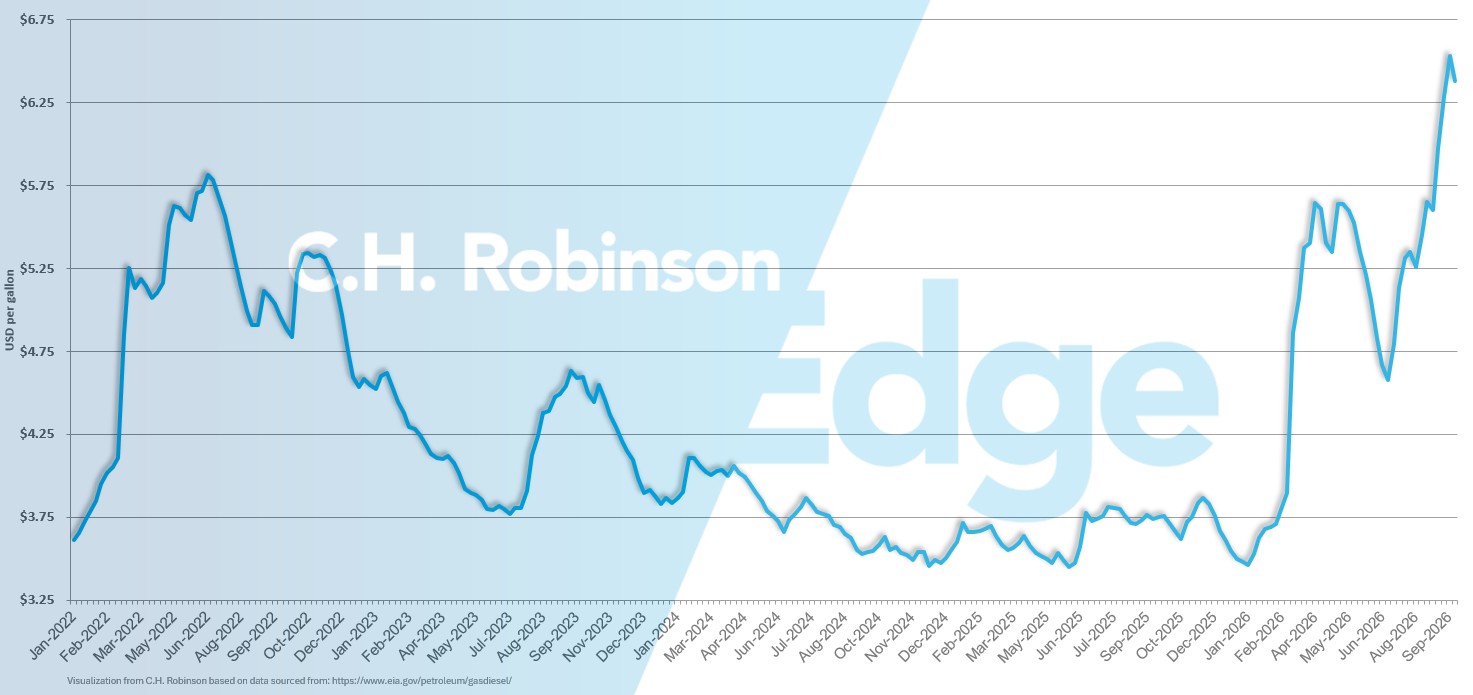
Precio medio del diésel por galón en EE. UU.
El precio medio nacional del diésel por galón en EE. UU. aumentó hasta un máximo histórico de 6,53 dólares en septiembre, superando el récord anterior de 5,81 dólares durante la semana del 20 de junio de 2022.
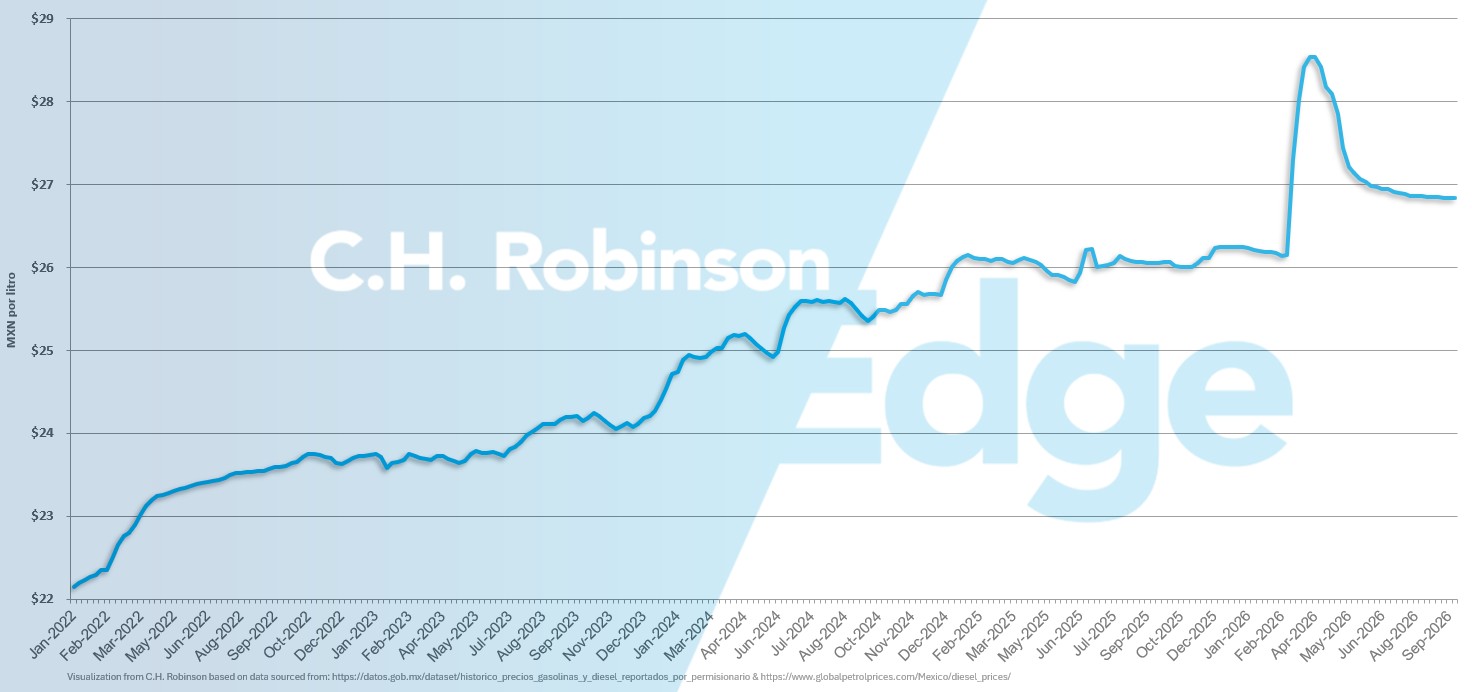
Precio medio del diésel por litro en México
El precio medio del diésel por litro de combustible en México se mantuvo estable, con descensos leves pero constantes durante gran parte del año.
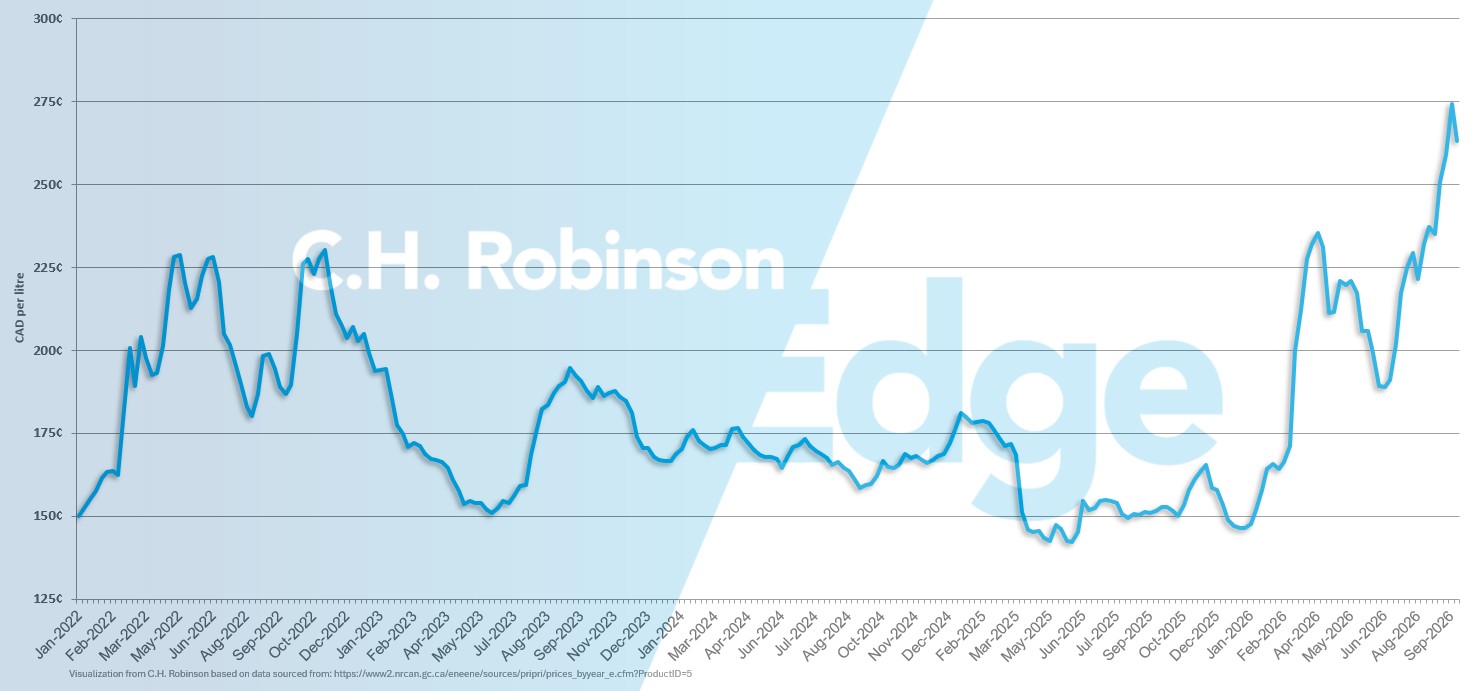
Precio medio del diésel por litro en Canadá
El precio medio nacional del diésel en Canadá, mostrado aquí en centavos canadienses por litro, aumentó durante el tercer trimestre hasta alcanzar nuevos récords.

 Información práctica sobre el mercado del transporte de mercancías