Severe weather puts shippers in a difficult position: Act too early and you may incur unnecessary costs. Wait too long and your options may become more expensive, limited or disappear altogether.
Moving inventory earlier, changing routes, splitting shipments or securing additional capacity all carry costs. But waiting can carry an even greater cost if disruption affects inventory availability, production continuity or customer commitments.
That trade-off is becoming especially relevant as climate change and the growing El Niño weather phenomenon adds pressure to supply chains. In fact, the National Oceanic Atmospheric Administration forecasts a greater than 90% chance of a very strong event during the Northern Hemisphere fall and winter of 2026–27.
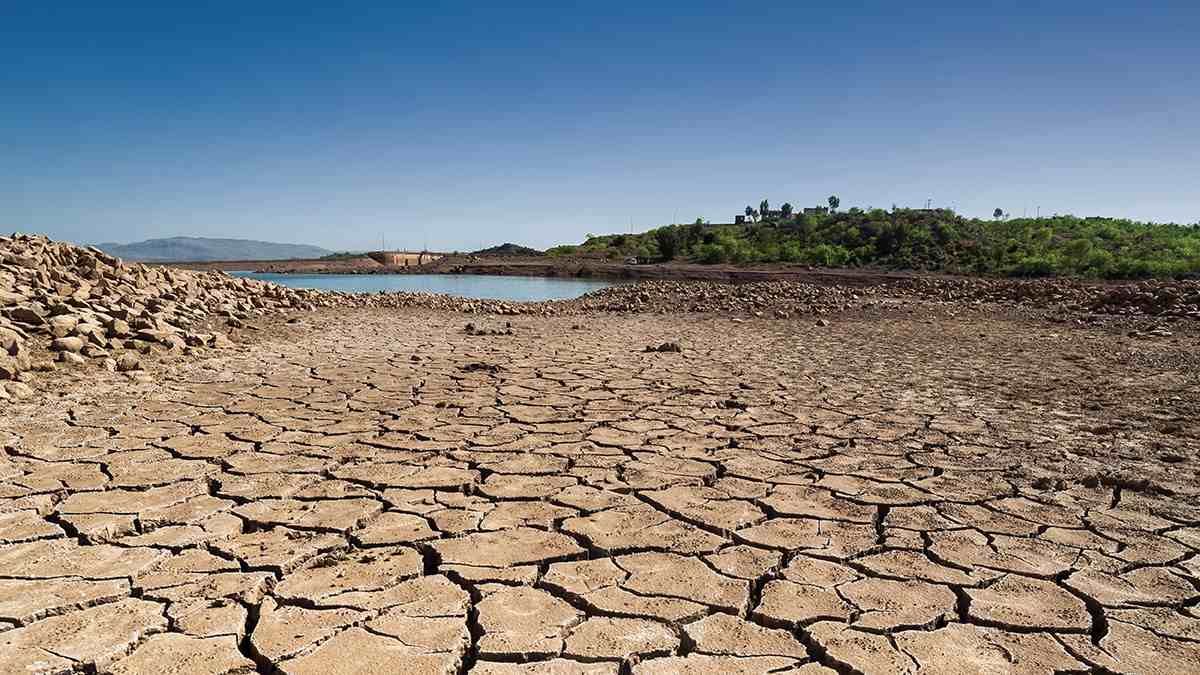
El Niño typically results in warmer temperatures globally, but its effects vary by region. South and Southeast Asia, Australia and Southern Africa may experience drought, while southern parts of South America and the United States may see heavier rainfall.
For shippers, the question is not whether every weather forecast warrants a freight-plan change. It is knowing when the potential business impact is significant enough to act.
When does severe weather risk warrant a change?
Planning for variability means building resilient systems supply chains that can adapt as conditions change. In the case of El Niño, the risk for shippers lies in waiting for the disruption to become fully visible before deciding to act. By the time a port closes or capacity tightens, the window for an easy response has often passed.
Once disruption becomes certain, the flow-on effects could build quickly. This includes tightened capacity, an increase in spot rates and extended lead times. Routes that appeared viable on paper may no longer be commercially or operationally practical or available.
The trigger for a plan change is when transport constraints create a material risk to inventory availability, production continuity or customer service levels, particularly when downstream inventory buffers are insufficient, retail deadlines become hard-locked or prolonged blank sailings threaten stock-outs during peak windows. Put more simply, the decision comes down to whether the expected disruption exceeds your supply chain’s ability to absorb the delay.
However, if you have sufficient inventory buffers and the expected disruption falls within acceptable lead-time tolerances, maintaining the existing plan and continuing to monitor conditions may make more sense. The decision is ultimately less about the weather forecast itself and more about the business impact it could create.
Experienced shippers know to plan ahead, but even they may underestimate the secondary or “ripple” effects, including:
- Cascading disruptions: A single weather-induced omission or blank sailing doesn't just delay one order; it traps equipment (empty containers) and distorts vessel rotations weeks afterward.
- Rapid capacity compression: When multiple loops try to recover simultaneously, market capacity compresses severely. As carriers adjust schedules, ports work through backlogs, other shippers compete for alternative transport options, and capacity tightens quickly.
Resilience does not mean responding to every forecast as though the worst-case scenario is inevitable. It means having a coordinated operating model with effective governance that defines how escalation decisions are made, how capacity is structured, how a mode shift is triggered, and how organizations balance service protection against cost exposure.
Every weather disruption is different
Not every weather disruption calls for the same response. Take El Niño for example. Shippers may be drawn to treat it as one clearly defined weather “trigger.” Instead, it is better understood as a changing field of risk, capable of placing new pressure on different parts of the supply chain and global chokepoints at different times.
That creates an important paradox. There may be growing confidence that a significant climate event is developing, but far less certainty about precisely where its most consequential effects will emerge.
In fact, some severe weather conditions can destabilize more than the ports and transport networks. The first indicators of disruption may even appear further upstream—before goods even begin their journey—through lower production levels, changes in commodity availability or pressure on commodity and energy costs. Lower water levels in the Panama Canal and potential increases in fuel costs can add further flow-on challenges.
European heatwaves offer another example of how weather impacts can extend beyond a single transportation mode. As drought lowered river levels, businesses that relied on inland waterways faced reduced capacity and had to consider more costly road and rail alternatives. The resulting delays affected production and demonstrated how infrastructure constraints can create consequences across the wider economy.
Instead of looking at a single location, assess the end-to-end supply chain by evaluating a combination of factors such as:
- Event characteristics: The severity and duration of the weather or operational event.
- Network exposure: The exposure of key suppliers, critical gateways, and potential impacts on transportation networks.
- Operational metrics: Vessel schedule reliability, terminal dwell times, and downstream trucking capacity.
- Inventory & alternatives: Inventory levels and available recovery or alternative routing matrices (such as transshipment alternatives or secondary ports).
Taken together, these factors can help shippers assess whether the right response for them is to maintain their existing plan, prepare an alternative or warrant a change to the freight plan.
Build optionality before you need it
Weather disruptions are becoming more frequent and interconnected. The most resilient shippers prepare response plans before disruptions occur, maintain flexibility across suppliers, carriers, and routing options, and use real-time visibility to make informed decisions quickly.
That means supply chain diversification, including genuine dual-mode capability where the shift between modes is operationally smooth rather than a crisis response and front-loading as a deliberate buffer strategy when macro signals suggest elevated risk ahead.
When advanced technology and human expertise operate together, supply chains are positioned to succeed. Connect with an expert to learn how C.H. Robinson can help you build a more resilient, responsive supply chain in an era marred by weather disruptions.