C.H. ROBINSON EDGE

Freight Market Update: August 2025

Energy

Navigating policy shifts & tariffs in the energy sector

업데이트됨

The energy industry, both oil and gas along with renewables, is experiencing significant transformation, influenced by evolving government policies and global trade dynamics.

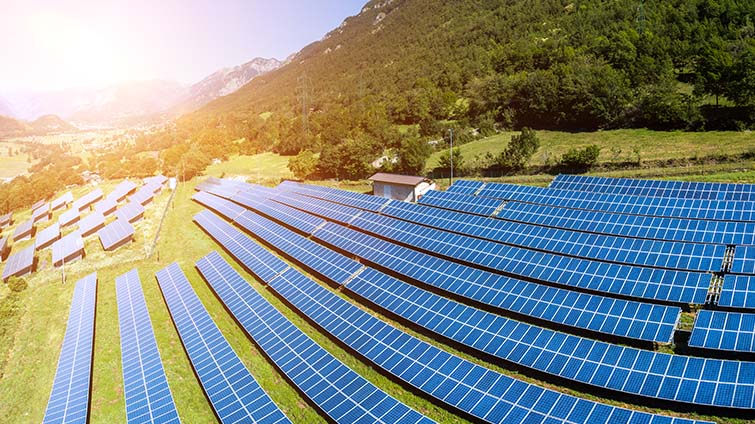
Following an anti-dumping/countervailing duty investigation initiated by the Biden Administration, the U.S. Commerce Department has announced plans to impose substantial tariffs, potentially reaching upwards of 3,500%, on solar panel imports from several Southeast Asian countries. This development is poised to significantly alter the cost structure and import dynamics within the solar energy market.

The increase in tariffs on goods from China is also affecting numerous components crucial for the production of renewable energy technology. While the renewable energy sector has demonstrated resilience through many disruptions in the past, escalating tariffs are expected to impact costs and reshape existing supply chain networks.

Domestic clean energy technology manufacturing in the United States has slowed, largely attributed to government funding freezes and calls for the repeal of portions of the Inflation Reduction Act and associated tax credits. While previously growing, the U.S. manufacturing capacity lags well behind China’s capacity and represents a small portion of overall U.S. demand.

This uncertainty has caused delays or pauses in planned electric vehicle (EV) battery manufacturing facilities, including a $1.2 billion lithium-ion factory in Arizona. Across the broader clean energy landscape, a total of $7.7 billion in projects has been cancelled in the first quarter of 2025, signaling a cautious investment environment.

The new clean energy projects announced in January 2025 totaled approximately $175 million, a stark contrast to the average monthly rate of $1 billion observed over the last three years. This significant decrease underscores the impact of policy uncertainty and tariff concerns.

Current global tariffs are also exerting influence on the oil industry, driving up prices. The implementation of protectionist policies by various countries, through tariffs on crude oil, refined petroleum products, and energy infrastructure products, is generating worldwide economic ripple effects.

Tariffs are influencing oil pricing, particularly as the risk of an economic recession increases. Analysts at S&P Global Market Intelligence predict global oil demand growth could be cut by 500,000 barrels per day, reflecting the interconnectedness of trade policies and energy markets. 

*이 정보는 공개적인 출처의 시장 데이터와 C.H. Robinson의 데이터를 비롯하여, C.H. Robinson이 최선의 판단하에 정확하다고 알고 있는 여러 가지 출처에서 수집한 것으로 이루어집니다. C.H. Robinson은 언제나 정확한 정보를 전달하고자 합니다. C.H. Robinson은 이곳에 게시된 정보에 대해 법적 등의 책임을 지지 않습니다. 

전 세계 고객에게 최대한 시의적절하게 시장 업데이트를 제공하기 위해 기계 번역을 통해 이러한 업데이트를 영어로 번역하고 있습니다.