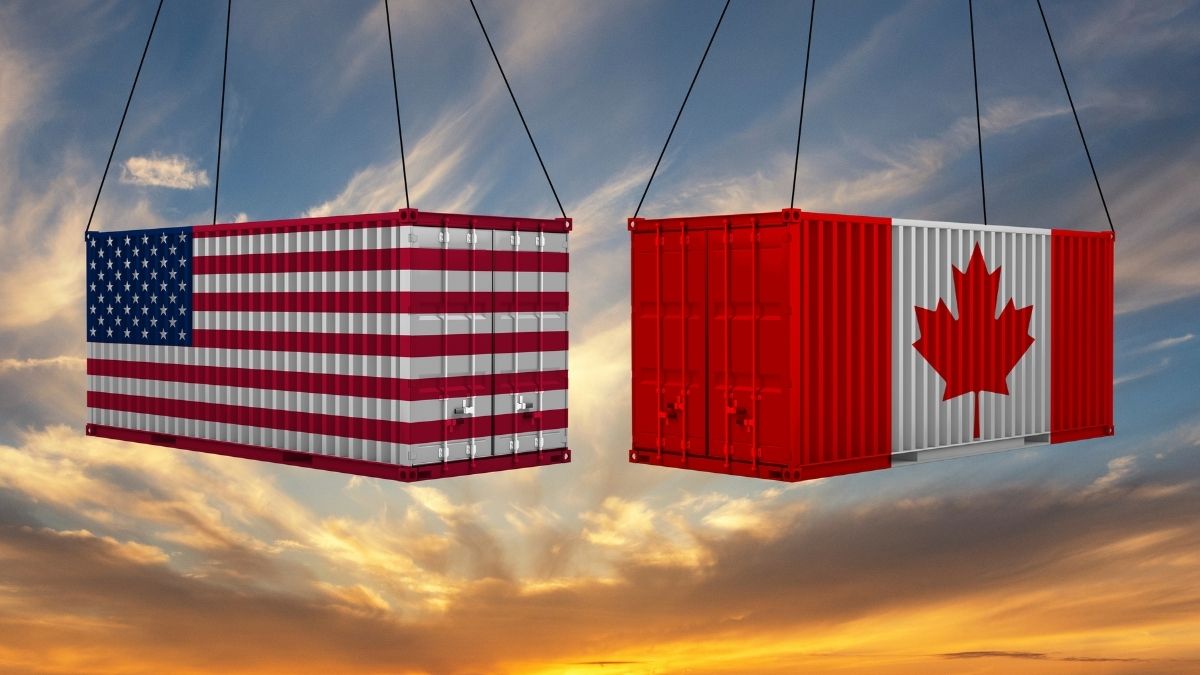
A new 50% Section 338 tariff is now in effect on certain goods from Canada, adding another layer to an already complex North American trade environment. While the measures were announced in response to Canadian policies involving U.S. alcoholic beverages, dairy products, and motor vehicles, the products affected extend well beyond those three sectors.
For U.S. importers, the measure is not a blanket tariff on all Canadian goods, and United States-Mexico-Canada Agreement (USMCA) qualification does not automatically exempt products from the additional Section 338 duty. Understanding whether your products are covered requires a closer look at product classifications, exclusions, and origin requirements.
Below, we'll explain which Canadian goods may be subject to Section 338 tariffs, whether USMCA-qualified products are exempt, and the steps importers can take to assess tariff exposure and landed-cost impacts.
Section 338 tariffs are now in effect
The new Section 338 tariffs took effect on August 22, 2026, imposing an additional 50% duty on certain goods imported from Canada.
Section 338 of the Tariff Act of 1930 allows the president to impose additional duties when another country is found to discriminate against U.S. commerce. The proclamations cite Canadian treatment of U.S. alcoholic beverages, dairy products, and motor vehicles as the basis for the action.
The current measures do not establish a fixed termination date, making it important for importers to assess potential exposure and monitor future developments.
Which Canadian products are affected by Section 338 tariffs?
The proclamations focus on alcohol, dairy, and motor vehicles, but the covered product lists reach into a much broader range of goods. Selected agricultural products, wood and paper goods, plastics, textiles, machinery, electronics, furniture, and sporting goods may also be affected. The White House fact sheet itself notes that coverage ranges from wine to hockey sticks and cement.
That distinction is critical. Importers should not determine exposure based solely on their industry or a general product description. Two companies importing similar goods from Canada may experience different results depending on how those products are classified.
Certain goods are excluded from the Section 338 duty, including specified products already subject to Section 232 measures and qualifying Canadian civil aircraft and related articles.
The practical takeaway: Importers need a product-level review. An assessment based only on country of origin or industry may overlook both tariff exposure and available exclusions.
Does USMCA exempt goods from Section 338 tariffs?
One of the most important aspects of Section 338 is its treatment of USMCA-qualifying goods. A product may still receive the applicable USMCA preferential rate for its ordinary customs duty. But if that product is included in the Section 338 action, USMCA qualification by itself does not remove the additional 50% tariff.
This may create an unexpected landed-cost impact for importers that have traditionally viewed USMCA qualification as their primary protection from additional duties on Canadian goods. Origin qualification remains important, but it is no longer the end of the analysis.
Covered merchandise may also remain subject to other applicable duties, taxes, fees, or trade remedies. Importers therefore need to look at the complete duty profile of each product rather than evaluating Section 338 in isolation.
How should importers evaluate their Section 338 tariff exposure?
A product-level review can help importers identify exposure, quantify the financial impact, and evaluate response options. Consider the following actions:
- Screen active Canadian-origin products. Compare currently imported goods with the final list of products covered by the Section 338 action.
- Validate classification and origin data. Small differences in product classification or country-of-origin determinations can significantly affect whether a product is impacted.
- Confirm available exclusions. Determine whether products fall within an applicable Section 232, civil aircraft, pharmaceutical, or other exclusion.
- Model the landed-cost impact. Quantify the additional duty at the product or SKU level and identify where the largest cost increases may occur.
- Evaluate mitigation opportunities. Depending on the products affected, importers may be able to reduce the impact through customs programs such as Chapter 98, foreign-trade zones, or drawback, as well as sourcing alternatives and other supply chain strategies.
- Coordinate across functions. Trade compliance, sourcing, finance, legal, and supply chain teams should work from the same exposure analysis.
What's next for Section 338 tariffs and Canadian countermeasures?
The Section 338 proclamations do not specify a fixed termination date and may be modified, suspended, or revoked. Importers should continue monitoring official government communications and trade guidance.
Canada has also announced countermeasures on selected U.S.-origin goods beginning September 8, 2026, including tariffs of 15%, 25%, and 50% on specified products. Although those measures do not change U.S. import filing requirements, they may create additional cost and planning considerations for companies with two-way trade or integrated North American supply chains. Importers and exporters can review the full product list published by the Government of Canada.
For organizations trading in both directions, the emerging issue is broader than one import tariff. It is the need to understand total cross-border exposure and incorporate that impact into sourcing, pricing, and supply chain decisions.
Stay informed
Developments in customs and trade continue to evolve—stay informed to be prepared: