If 2026 was the tipping point for the trucking market, 2027 will be the year the trend lines take hold, the market settles into its new shape, and shippers have the opportunity to plan for it.
Now that the prolonged period of excess trucking capacity and soft rates has ended, the coming year will still largely be defined more by capacity than by demand. The market has found a new equilibrium, but one with very little margin for error. Shippers can expect these conditions to amplify any disruptions that come along.
Here’s what I’m watching heading into 2027, and my best advice for planning your RFPs and your 2027 freight transportation budgets.
Supply: What will determine trucking capacity in 2027?
Higher carrier operating costs, stricter regulations, and the legal environment could all contribute to capacity tightening further in 2027. But even if capacity is adequate nationwide, shippers still need to plan for less slack in the market during seasonal surges and localized disruptions.
In 2026, shippers have already been reaching down further into their list of preferred 3PLs and carriers to get their freight covered. With 1.0 being perfect and 2.0 extremely poor, route-guide depth for longer hauls has been above 1.4 the whole year and sometimes crested above 1.6. Route-guide failure, when contracted freight gets pushed into the spot market, reached 8% at the tightest point in the market this summer.
The jump in rates that would normally keep more capacity in the market hasn’t overcome higher operating costs for many carriers, especially the owner-operators that dominate U.S. trucking. The near-doubling of diesel prices, for example, has been hard for carriers to absorb because it affects both their loaded and empty miles. Expect diesel prices to stay above historical norms into at least the first half of 2027, and the U.S. diesel inventory to stay below five-year lows through much of the year.
Regulation will also continue to be a drag on trucking capacity in 2027. The cumulative effect of English-language proficiency requirements, new limits on commercial driver’s licenses and visas, and the shutdown of driver-training programs has been greater than any individual change. Together, they remove existing drivers and carriers from the marketplace while also creating barriers that prevent or discourage new entrants. For cross-border shippers, these regulations are keeping drivers in Mexico who might otherwise have provided direct service.
A new factor is the fallout from the U.S. Supreme Court’s Montgomery decision, which brought greater scrutiny to carrier-vetting practices. Smaller carriers may not be able to stay in business in the face of higher insurance costs or less freight to choose from as companies narrow the pool of carriers they’re willing to use. On the flip side, without a national carrier-selection standard, carriers now have to devote resources to proving they meet each individual shipper’s and broker’s safety rules. Carriers may become more selective about the freight they haul, the routes they take, and the shippers they serve.
The net effect of the cost, regulatory, and operational pressure on carriers is that despite a projected 10% increase in rates next year, we anticipate the addition of new carriers and the expansion of existing carrier fleets to be slower than in previous market cycles.
Demand: How will trucking volume shape the market in 2027?
Few signs point to a significant across-the-board increase in demand that would make it harder for shippers to obtain trucking capacity in 2027. In the major freight-producing areas of the economy, pockets of demand strength have emerged, including certain types of industrial freight. Retail spending has been resilient, but consumers continue to have less discretionary income. Housing remains weak.
You should, however, plan around some regional and industry-specific changes in demand.
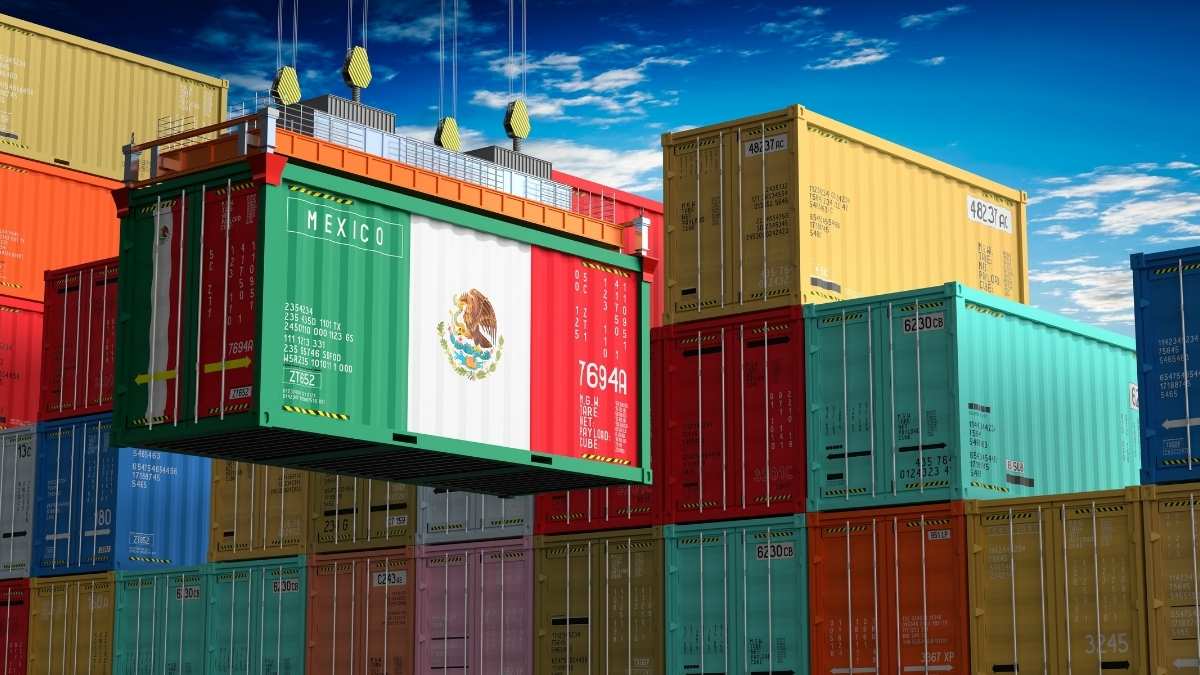
Record-setting exports of electronics and computer equipment out of Mexico are making cross-border freight in corridors like El Paso, Texas, more prone to peaks in demand and short lead times. AI and data-center construction can meaningfully impact specific markets and demand for equipment types, especially flatbed or the specialized tractors and trailers needed for heavy haul. Sensitive new medications now need temperature-controlled capacity just like fresh produce, other food and beverages, and even some technology.
None of these new trends are materially affecting national demand like retail or housing, but shippers competing for capacity in select lanes may feel the impact.
What will supply and demand mean for trucking rates in 2027?
The 2026 spot market produced aggregate rate increases for dry van, reefer, and flatbed in the 28% to 31% range, and contract prices followed. The C.H. Robinson forecast has 2027 shaping up to layer on another, but lower, double-digit increase.
Because of higher-than-expected rates in October of this year and less-than-expected rate relief in November ahead of the holidays, our forecast for the rest of the year calls for a steep climb in rates through December, starting 2027 at a higher point than we’ve seen in all of 2026. When rates come down as they usually do in the early months of 2027, we expect them to taper off at a place generally higher than rates have been throughout 2026.
It bears repeating that this is not a classic coming together of low trucking supply and high demand. With 2027 being a supply-driven market, the combination of tighter capacity across the board and less slack to accommodate events like a winter storm, a trucking strike in Mexico, or produce season may spur sharper rate increases for specific lanes, regions, or periods of time.
For both contract and spot freight, higher carrier operating costs, compliance costs, and increased wages for a smaller pool of drivers are likely to contribute to upward pressure on rates. Drivers who might once have left larger fleets to become owner-operators may also have greater incentive to stay with established carriers, reducing competition between carriers that might otherwise moderate rates.
Businesses building 2027 transportation budgets should also plan for fuel surcharges to remain elevated relative to historical norms. Even if crude oil prices moderate, diesel refining is stretched thin globally, and that could keep diesel prices higher well into next year.
Many factors can change our trucking forecasts. Check them monthly in the C.H. Robinson Edge Report.
LTL: Stable capacity doesn’t necessarily mean stable costs
For less than truckload (LTL) shippers, we expect capacity and demand to be relatively stable in 2027, but that doesn’t mean shippers should expect costs to remain flat, too.
As truckload pricing has risen, smaller shipments have been migrating back into LTL networks, increasing terminal and truck utilization. Expanding an LTL network by adding terminals or dock doors takes time. This should keep capacity growth measured.
Meanwhile, LTL carriers remain focused on efficiency and profitability rather than pursuing volume through rate cuts. Each shipment requires local pickup; terminal space, equipment, and labor at origin; a longer haul; and then more terminal space, equipment, and labor at the destination. As a result, LTL carriers feel higher operating costs acutely and are taking new steps to recoup those costs.
We’ve seen a marked increase in adjustments to:
- Minimum charges
- Accessorials
- Fuel-surcharge programs
- Compliance fees
- High-cost-area surcharges
If you’re a shipper in a high-cost area, have oversized freight, or require a liftgate, inside delivery, or other special handling, you’ll need to account for these higher charges in your 2027 transportation budget. You should also make sure you bid your 2027 LTL freight with brokers or carriers that can provide the level of service you need.
Strategies for your 2027 RFPs
The lowest rate on paper won’t necessarily produce the lowest cost or the most reliable transportation network in 2027. Use these guidelines to help build your strategy.
Strive for high tender acceptance
An aggressive contract rate has limited value if it doesn’t translate into reliable tender acceptance when the market is tight and your freight unintentionally ends up in the spot market. Our forecast anticipates meaningful spot-rate increases. Review your scorecard and rationalize your brokers and carriers accordingly.
Many shippers are telling us they want to work with fewer logistics providers in today’s environment, in part to mitigate risk. But fewer, stronger relationships generally benefit a shipper more than a lengthy route guide anyway. With more volume, a provider can offer more consistent tender acceptance and service levels.
Segment your freight
Don’t treat all your lanes equally. Understand which are worth putting out to bid, which should be awarded directly because they’re a good fit for the carrier’s footprint, and which should be left for the spot market because of low-volume or inconsistent freight. Segmenting your freight will help you get your preferred level of service at the best rates and avoid the hidden costs of ghost freight.
Strategically bundle your spot freight
Our research with MIT shows that it pays to include spot freight in your route guide, and that where you position it also matters. Both planned and unexpected freight are compatible with this approach, reducing the likelihood of route-guide failure and allowing your broker to get you a competitive market rate faster.
The deeper you go in your route guide and the longer you’re delayed getting to the spot market, the higher the premium you pay. If you go through all the carriers in your route guide and only then turn to the spot market, the research shows you can pay 23% to 35% extra on your shipment.
Our Lean AI gives customers up to 23% faster speed to market. Our fleet of hundreds of AI agents performs shipping tasks in seconds instead of hours or minutes. The faster you get a quote, the faster your order is processed, the faster you get ideal pickup and delivery appointments, and the faster you’re matched with the ideal carrier.
Bid your live load and drop-trailer freight together
Too many shippers separate these into different RFPs. Put together, you can optimize across both. Separated, you lose the opportunity to flex between live load and drop trailer when it’s advantageous or necessary. Bidding your drop-trailer freight with a broker also gives you greater access to trailers should you want to expand your drop-trailer program midyear.
Consider working intermodal into your portfolio
Intermodal pricing, while rising, is doing so more gradually than truckload pricing. Review freight that moves roughly 550 to 1,500 miles where an additional day or two of transit is acceptable. Confirm the freight’s suitability for intermodal, including blocking, bracing, and handling requirements. Then bid your freight with a provider that has strengths in both modes to help you create a blended strategy.
Plan your Mexico cross-border freight corridor by corridor
Trade growth in different industry sectors is creating different capacity conditions at each border crossing. Capacity conditions change again after freight crosses the border. Rather than treating cross-border trucking as one market, evaluate where your freight might be competing with greater export flows and might experience greater price and service variability.
Finally, don’t treat the RFP as the end of the process
The market ahead doesn’t resemble a classic nationwide capacity crunch. But it leaves less margin for inaccurate forecasts, poor carrier alignment, or route-guide failure. Shippers that bid their freight strategically now will be best positioned to protect both cost and service in 2027.
For more insights, read C.H. Robinson’s 2027 Freight Market Outlook and our 2027 outlook for ocean and air shipping.