Supply chains run on numerous data sets that must work in concert to drive efficient, agile execution, exceptional service, and cost optimization. ERP systems, transportation management systems, planning platforms, visibility platforms.
Together, these systems enable end-to-end visibility and execution that manage the complexity of modern supply chains from the procurement of raw materials all the way to a finished product arriving at a customers dock or doorstep.
With more robust tech stacks and AI, supply chain leaders now have access to unprecedented volumes of data. Yet the challenge isn't data availability. It's ensuring that data remains consistent, connected, and usable as it moves across the many systems, partners, and workflows that power global supply chains.
Despite years of investment in integration projects, shared data models, and master data governance programs, many organizations still struggle with fragmented information, disconnected workflows, and incomplete order details. The result is a persistent challenge that impacts supply chains every day: critical decisions often must be made with missing or imperfect data.
The data problem slowing down supply chains
Supply chains depend on accurate data. Yet many shippers struggle to maintain consistent, up-to-date information across the systems, partners, and processes involved in moving goods around the world. When shipping requirements, product attributes, dimensions, weights, delivery dates, or carrier preferences are incomplete or inaccurate, the result can be delays, increased costs, and reduced agility.
With advances in technology powered by our Lean AI strategy, shippers can effectively tackle the challenge from both ends: resolving critical data gaps in real time while identifying the recurring sources of data quality issues that require upstream correction. The result? Accelerated decision-making, enhanced service levels, reduced disruptions, and more resilient supply chains.
The cost of incomplete order data
Historically, gaps in data require timely manual intervention to troubleshoot. For example, when an order is missing necessary information, it can sit in a queue for up to 2,275 minutes (38 hours) on average waiting for manual review. With every hour a shipment is delayed, the result is often:
- Higher capacity costs as shippers go to the capacity market delayed and with shorter lead times resulting in tender rejections, increased spot market activity and the need to explore expedited options
- Longer inventory cycle times and carrying costs as items are not moving as they originally intended
- Poor experience for our customers’ customers including lack of visibility and increased transit times
Another unintended consequence from this troubleshooting is that no situation is handled the same way. Manual solutions can be stored inconsistently, leading to delays when customer business rules are not broadly available or known among teams.
And even if the problem is the same—shipping dates supplied consistently do not match business rules—depending on which individual jumps in to troubleshoot, the problems can be handed differently. Spending their time fixing data, team members are burdened with manual data entry instead of focusing their time delivering superior customer outcomes.
While organizations continue to invest in data governance, integration, and master data improvement initiatives, these efforts often take years to fully realize.
A new option has emerged: AI-powered systems that can intelligently identify and fill critical data gaps using customer-specific context, enabling supply chains to operate more effectively today while helping teams pinpoint where long-term data improvements will have the greatest impact. That's exactly what the Lean AI Planner delivers.
How the Lean AI Planner addresses the master data problem
Lean AI Planner is comprised of hundreds of agents that together act as the supply chain orchestration layer that plans and executes across the full shipment lifecycle. Trained on over 100 trillion proprietary datapoints generated across decades of global operations, the agents within the Lean AI Planner not only learn with each individual customer’s shipment, but shipments across the entire network.
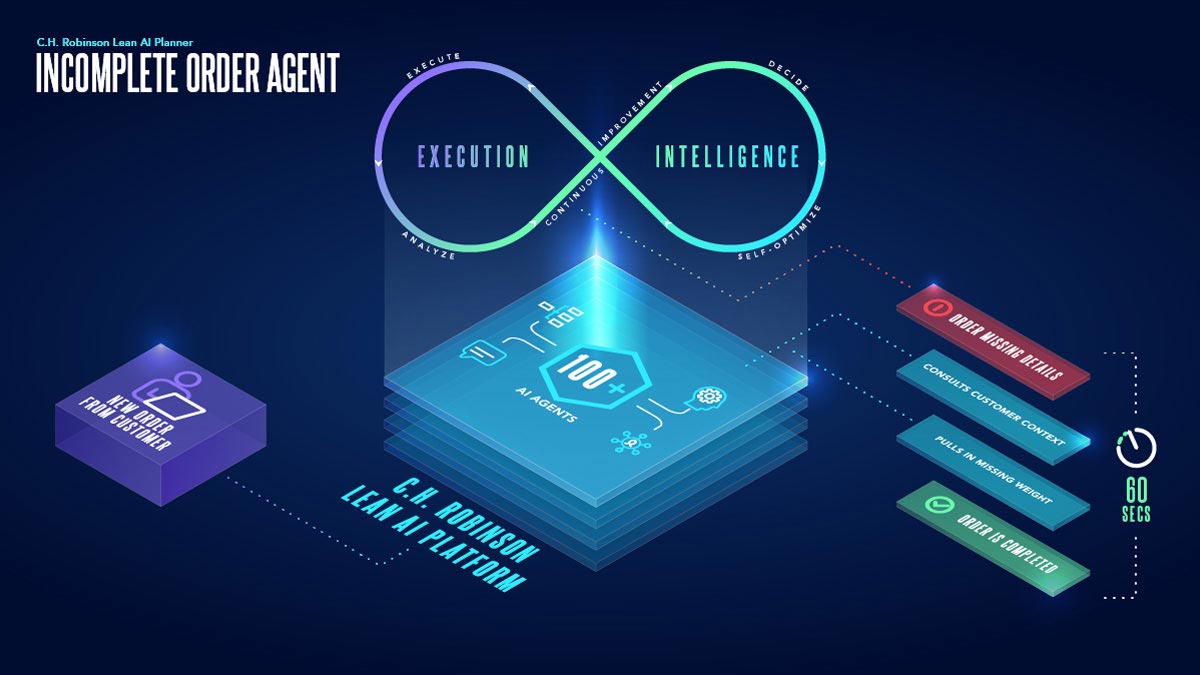
The incomplete data solution within Lean AI Planner was designed to solve data integrity issues without manual intervention, helping orders move forward faster and more consistently. Within 60 seconds the Lean AI Planner:
- Real time identification of orders missing critical information for execution
- Using the Lean AI Context Builder, it evaluates the order against account specific business rules, product attributes, historical shipping behavior, vendor requirements, transportation preferences, and operational procedures
- Determines the required correction, sources the correct data from the correct location, and updates the order so it’s ready for execution
- Records the reason the correction was made to fuel continuous improvement.
What used to take an average of 2,275 minutes to fill incomplete order data manually has improved by 99.95% to just one minute with a 95% success rate since the Lean AI Planner incomplete data solution has rolled out across our network.
Incomplete data is a problem of the past for customers with highly complex supply chains like Stanley Black & Decker. With over 40,000 unique product SKUs, 100% accuracy is near impossible for the team to manage on an ongoing basis given the complexity in managing data across multiple product lines, vendors, and locations.
Orders with incomplete data like incorrect weight or shipment size were historically put in a holding pattern until a person could provide the missing information which extended cycle times. For Stanley Black and Decker, the C.H. Robinson team previously manually corrected roughly 2,000 orders a month, which eliminated an estimated 4.5 million minutes of waste.
Now, the Lean AI Planner identifies what information is missing from Stanley Black & Decker’s orders and inserts the missing datapoints. When the Lean AI Planner can’t correct the order on its own, it elevates the issue to a C.H. Robinson team member to complete the task and identifies the context needed to solve with high confidence in the future.
Stanley Black & Decker master data solution results
- 87% of incomplete order corrections now happen autonomously.
- Corrections are completed in less than a minute.
- ~2,000 orders are corrected automatically each month
- 32 hours monthly time savings for load planning teams
- Fewer orders sit in a holding status, helping Stanley Black & Decker go to market faster with secured capacity, lower inventory costs, and a better customer experience.
Why context matters
Lean AI Planner’s speed to correct incomplete orders is made possible by the Context Builder. Before the Lean AI Planner was deployed, customer-specific information resided within team member’s heads or scattered across different documents.
With the Lean AI Context Builder, critical customer shipment information, preferences, supplier requirements, and specific business objectives are now centralized and readily available for Lean AI Planner’s hundreds of agents to leverage to make smarter, better, and faster decisions.
For our customers, this means they do not have to spend time untangling or filling in messy ERP data and working on operational exceptions. Instead, Lean AI Planner can help cleanse, streamline, and fill data gaps based on a customer's specific context, needs, and business rules. The result is greater decision velocity and supply that can correct issues before they create downstream disruption.
The Self-Healing Supply Chain
Lean AI Planner’s ability to improve master data quality transforms supply chain performance from reactive to proactive. While incomplete data isn’t a problem that will go away overnight, deploying agentic workflows to address data accuracy issues is creating significant business value.
With orders no longer delayed, businesses benefit from lower transportation spend, improved margin protection through improved shipment planning, reduced reliance on expedited or spot market, higher tender acceptance, and more reliable order-to-delivery cycle times. In a supply chain environment where imperfect data no longer stands in the way of business performance, leaders are free to optimize outcomes rather than troubleshoot issues.
Solving incomplete order data is only the beginning. For a broader look at how Lean AI is helping organizations address supply chain challenges and unlock continuous improvement, watch our on-demand webinar, The Self-Healing Supply Chain.