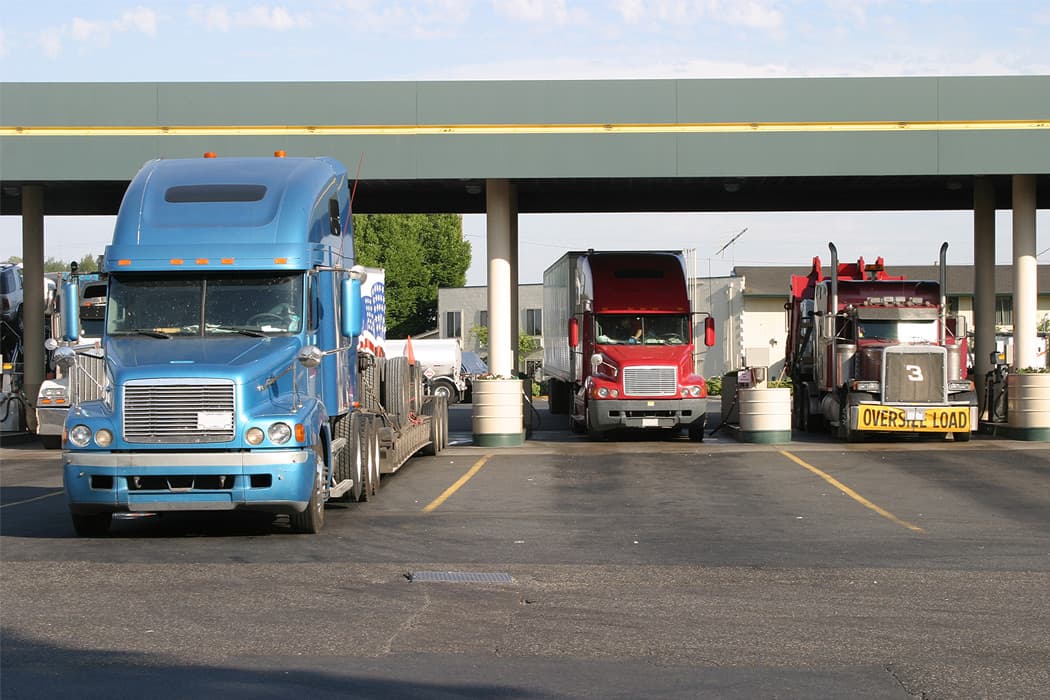
Over the last two months, fuel prices have increased over 55% per gallon. That increase can add anywhere from $100 (500 load miles) to $400 (2,000 load miles) in cost per trip. While oil prices are particularly difficult to predict, there are ways to mitigate the impact of these rising fuel charges.
1. Track and reduce non-revenue generating miles
Be sure to track and actively minimize non-revenue generating miles. According to a 2024 survey by the American Trucking Research Institute (ATRI) 16.7% of miles were reported as deadhead. Especially in times of high fuel costs, a high percentage of deadhead miles has significant impact on your bottom line.
The best ways to reduce deadheads is to find loads for trips that would have otherwise remained empty and to minimize the distance required for pickup. To achieve this, you need better insights into available loads to plan routes that reduce the empty miles. The Navisphere® Carrier load board displays more than 25,000 loads each day and even recommends loads based on location, minimal deadhead miles, and past bookings. With access to a wide range of loads and valuable information on that freight, it becomes much easier to maximize revenue generating miles.
2. Minimize dwell time
While it is almost impossible to eliminate all dwell time, efficient routing and processes like tracked check-in and exit procedures, no-touch palletized freight, and clean paperwork can be streamlined to reduce dwell time. 3PL companies like C.H. Robinson work with many “shippers of choice” on live load freight to help ensure processes are optimized for minimal dwell time.
Another way to reduce time is to work with drop trailer providers. Power-only loads allow drivers to unhitch their trailers and get back on the road with virtually no dwell time at all. C.H. Robinson is the fourth largest drop trailer provider in North America.
3. Maximize savings at the pump
ATRI reported that fuel was over 21% of total truck operating costs in 2024, with that number being as high as 28% in 2022. With today’s rising costs, that percentage will likely grow in 2026 . Because so much fuel is needed, most carriers participate in programs to help protect profit margins and reduce risk of volatile fuel costs.
When used consistently, these programs can contribute significant savings to your operational costs. For example, the C.H. Robinson Fuel Card can save you between $0.37-0.40* per gallon, resulting in savings of over $10,000 per year for each truck. We know that rising diesel prices are putting real pressure on carriers. That’s why this April and May, C.H. Robinson is offering free discount-fuel cards and free cash advances for fuel to support the carriers who keep supply chains moving.
Additional references:
- For information on oil price trends, visit the U.S. Energy Information Administration site.
- American Trucking Research Institute, An Analysis of the Operational Costs of Trucking: 2025 Update
* Fuel savings averaging 37-40 cents per gallon at TA Petro, TA Express, and savings at participating Casey’s commercial locations is based on previous quarter analysis, subject to change without notice.