One of the things I appreciate most about working in logistics is how quickly it exposes what actually works. Technology either holds up in the real world, or it doesn’t. That’s part of why being recognized by Fast Company as one of the Most Innovative Companies of 2026 is meaningful to us at C.H. Robinson — because innovation in this industry only matters if it improves how freight actually moves.
Supply chains are dynamic, interconnected systems operating around the clock, and they rarely behave exactly as planned. Weather changes, capacity tightens, regulations evolve and customer demand shifts unexpectedly, to name a few issues. The challenge is not creating technology that performs well in a controlled environment. The challenge is building systems that help people make smarter decisions while all of those variables are changing simultaneously.
That mindset has shaped how we’ve approached AI at C.H. Robinson over the last several years. From the beginning, we believed the real opportunity wasn’t simply to add AI features onto existing processes. It was to rethink how intelligence could operate inside the workflow itself — helping our teams, customers and carriers respond faster, prioritize better, reduce friction, and make more informed decisions in real time.
That sounds straightforward, but operationalizing it at the scale of a global logistics platform is difficult work. It requires the right technology foundation, strong data, disciplined processes, and close partnership between software engineers, data scientists, product teams and the logisticians who understand how freight actually moves through the real world.
One thing I don’t think gets recognized enough is the caliber of technical talent required to make that happen.
When people think about logistics, they often picture trucks, warehouses and freight movement. What they may not realize is that behind those operations are teams of software engineers, architects, data scientists, and product leaders building highly sophisticated technology systems that process enormous amounts of real-time information and help orchestrate millions of decisions across global supply chains.
That’s part of what makes me proud of the team we’ve built at C.H. Robinson. We have people here doing incredibly advanced technical work, but they’re doing it with a very practical mindset. They stay focused on solving real operational problems for customers, not just building technology for the sake of technology.
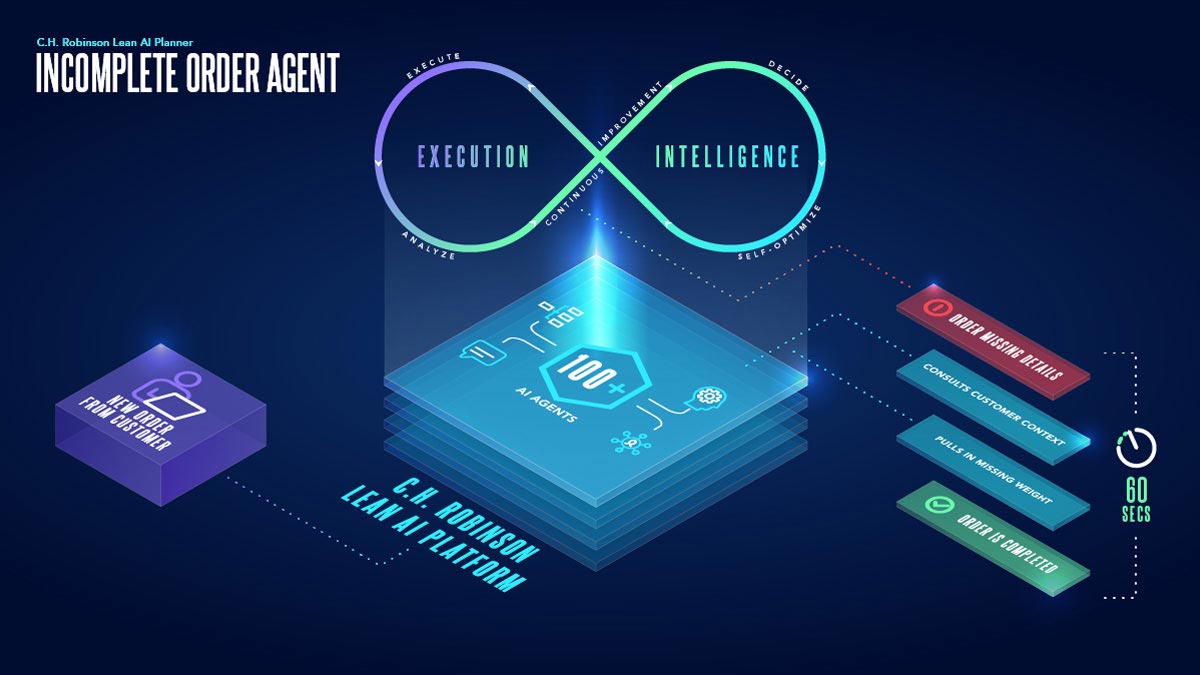
That’s also why we live Lean AI. The AI part obviously matters, but the Lean part matters just as much. The real value doesn’t come from a single model or tool. It comes from continuously improving how decisions get made across the network. In logistics, even small improvements can have a meaningful impact when they’re applied consistently at scale. Over time, those improvements start to compound.
You reduce manual touches and surface insights faster. You help teams focus on solving the highest-value problems, create more visibility for customers and respond to disruptions more effectively. Eventually, the technology becomes less about individual tools and more about building a smarter, end-to-end operating system for how supply chains function. That’s the journey we’ve been on at C.H. Robinson.
What makes this moment especially meaningful is seeing the broader market begin to recognize that innovation is happening inside logistics in a very real way. Recent recognition from Fast Company is something our teams should feel proud of because it reflects years of focused work that often happened quietly behind the scenes.
For a long time, supply chain technology wasn’t viewed as part of the mainstream innovation conversation. Today, that’s changing. Companies increasingly understand that supply chains are where digital intelligence meets physical execution, and AI becomes tangible very quickly when it improves inventory flow, transportation decisions, resiliency or customer outcomes.
To see a logistics company recognized alongside organizations like Google, Walmart, and NVIDIA is a reminder that this industry is evolving faster than many people realize. And honestly, I think we’re still early.
The next phase of AI in logistics won’t simply be about visibility or automation. It will be about orchestration — systems that can help companies anticipate issues earlier, adapt faster and make better decisions across increasingly complex global networks.
That’s not something any company solves overnight. But it is something we’ve been building toward for years, and it’s what continues to make this work exciting. Because when innovation is applied the right way in logistics, it doesn’t just improve systems. It improves how the world moves.