The 2027 freight outlook doesn’t lend itself to a single, simple conclusion.
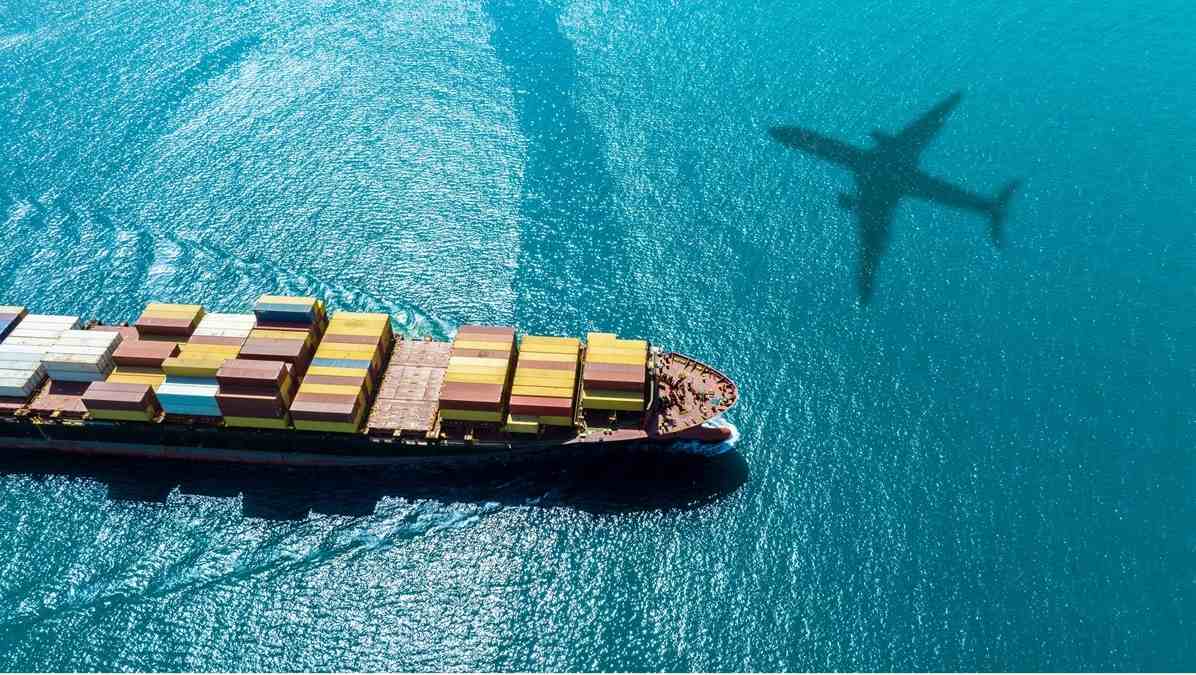
Air and ocean freight enter 2027 with very different supply, cost, and service pictures. Ocean carriers continue adding vessels faster than demand may grow on several major trade lanes. Air capacity is expanding in some markets, but not as quickly as the demand for technology, semiconductors, and oversized cargo.
The key distinction is between capacity and service. A vessel in the global fleet may no longer support the port pair, transit time, or delivery window a shipper needs. An aircraft may have cargo space without the configuration required to accommodate a particular shipment.
For businesses planning ahead, the issue isn’t simply how much ocean capacity there will be in 2027 and how that will affect rates. It’s whether the right capacity will be available on the trade lane, departure, and service needed to support your inventory plan.
These five questions can help businesses test their assumptions and prepare for the year ahead.
1. Will more capacity create more options?
With ocean freight carriers adding vessels faster than demand may grow, how quickly that additional supply is felt in the market will depend in part on Red Sea routing.
Diverting ships away from the Suez Canal and around Africa’s Cape of Good Hope instead has lengthened voyages between Asia and Europe and absorbed vessel capacity that would otherwise be available elsewhere in the global network. Some services have begun returning through the Suez Canal, although any broader normalization remains dependent on security conditions.
If a broader return to the Suez occurs, shorter round-trip rotations would return vessel days to the market. That would make more of the underlying fleet supply available just as new vessels continue entering the market, pushing rates down—particularly between Asia and Europe—if demand remains moderate.
As networks adjust, the repositioning of vessels, schedule adjustments, and changes in container flows could temporarily bunch arrivals or create port congestion. So shippers may gain negotiating leverage before they gain operational consistency.
Meanwhile, India, Southeast Asia, and parts of Latin America could absorb more capacity if sourcing and trade volumes continue to expand.
Air freight presents a very different challenge. Ecommerce remains an important source of air cargo demand, with more growth focused on Latin America, the Middle East, and intra-Asia freight, and a rebound taking shape in the U.S. after the end of duty-free de minimis treatment for lower-value items. But, most notably, technology and AI-related freight are expected to be one of the strongest sources of concentrated demand in 2027, especially from China, Taiwan, and Korea to the United States.
At the end of September, global air cargo tonnage was up 9% year-over-year, with Asia–Pacific freight up even more at 10%, while capacity grew only 4%. Those figures do not suggest a worldwide aircraft shortage, but they illustrate how demand can outpace supply in specific markets.
The cargo profile matters as much as the volume: dimensions, value, handling requirements, and delivery deadlines determine which aircraft can actually move the freight. Semiconductors, servers, and oversized technology equipment may require freighter capacity that passenger aircraft cannot provide, regardless of how much belly space is available. Many of these shipments also move on very strict timelines.
The result for 2027 is not likely to be a broad air-capacity shortage. Pressure is more likely to be concentrated around specific origins, aircraft types, and freighter departures, when high-value cargo tightens allocations for other freight.
What shippers should consider doing
- Identify the lanes and cargo types for which total capacity is a poor measure of usable capacity.
- For ocean freight, track workable sailings, direct calls, and container availability.
- For specialized air freight, provide dimensions and handling requirements early, then forecast against actual freighter rotations and allocations.
2. Will your freight service change before your market does?
One of the easiest mistakes to make in transportation planning is watching broad market indicators while overlooking ground-level changes made by individual carriers.
Ocean carriers can change weekly supply without shrinking the global fleet. Blank sailings, port omissions, service consolidation, vessel redeployment, and slow steaming can all reduce the number of workable options on a lane. While the lane remains in a carrier’s network, the product offered may not be the same. These changes can affect inventory and customer commitments even when the available rate appears attractive.
In 2026, for example, MSC suspended its Indus Express service to the U.S. East Coast, while CMA CGM withdrew its CJX service from South India and consolidated freight onto other services. The global container fleet was not constrained, yet fewer service options tightened allocations and bookings. Similar network adjustments could remain an important tool for carriers in 2027 as they manage larger fleets and adapt capacity to changing demand patterns.
Airlines can make similar adjustments even more quickly. A contract or allocation may remain in place while aircraft type, frequency, or departure day changes. For instance, strong AI and technology freight demand in Asia can draw increased freighter capacity, narrowing options elsewhere, even when overall air capacity remains balanced with demand.
What shippers should consider doing
- Make service decisions alongside rate decisions.
- Identify lanes that depend heavily on one gateway, sailing or freighter departure, or transshipment connection.
- Track workable weekly departures, direct and transshipment coverage, service frequency, container access, and aircraft type against the requirements of the freight.
- Establish viable alternatives before the network changes.
3. Are traditional market signals telling the whole story?
Broad statistics are useful, but without lane-level context, they can create false confidence. In 2027, it will be more important than ever to isolate the signal that matters from the noise of the market.
More vessels in the worldwide fleet does not guarantee more sailings on a specific lane. More belly capacity on passenger flights won’t help an oversized shipment that requires a freighter. An attractive published transit time may not reflect an unreliable connection.
For air freight, fuel adds another layer to the picture. U.S. Gulf Coast jet fuel was about $4.20 per gallon in early November, roughly 86% higher than a year earlier, according to data from the U.S. Energy Information Administration. Higher fuel costs particularly impact freight economics for older, less fuel-efficient aircraft. But carrier operating costs and market rate don’t always move together: where supply exceeds demand, competitive base rates can offset part of the increase in fuel-related cost.
Traditional peak seasons are also becoming less reliable as a standalone planning tool. Launches of new consumer electronics, schedules for industrial projects, and geographical shifts in ecommerce demand can tighten air capacity outside the traditional peak air-freight season. In ocean shipping, consecutive blank sailings or a service restructuring can reduce workable departures even at times of the year when underlying demand is soft.
What shippers should consider doing
- Combine macro capacity and rate data with lane-level operating indicators.
- Monitor blank sailings, service announcements, container availability, aircraft deployment patterns, allocation use, booking patterns, and actual schedule performance.
- When booking patterns diverge from the historical calendar, adjust the forecast to what the network is showing.
4. Is there a smarter way to move the freight?
Because the 2027 outlook for air and ocean freight are so different, the economics of which mode makes sense for individual shipments may change accordingly.
For instance, changes to U.S. tariff policy on low-value imports have already altered the China–U.S. ecommerce model. Airlines adjusted capacity as volumes declined, while ecommerce platforms increased bulk consolidation and shifted more freight toward business-to-business-to-consumer models, reducing reliance on individually packaged shipments moving by dedicated air charter.
As a result, inventory that can be prepositioned ahead of demand may move more economically by ocean if additional vessel supply keeps rates competitive. At the same time, air may remain important for replenishment, high-value products, stockout recovery, and goods tied to short selling windows.
For AI-related freight, high-value components like semiconductor-manufacturing equipment, servers, and data-center components often must move against hard commissioning deadlines. But that does not mean an entire project must move by air. Where the cargo profile allows it, a more economical strategy may be to expedite only the components on the critical path while moving less time-sensitive freight by ocean.
Disruption can change the mode decision as well. Airspace restrictions can lengthen flight routes and increase aircraft utilization, while the risk of a missed transshipment connection or inland transportation delays can add enough time to an ocean move to change the economics. The relevant comparison is door to door, not simply the air rate versus the ocean rate.
What shippers should consider doing
- Segment shipments by value, urgency, dimensions, and consequence of delay.
- Identify which components are truly on the critical path, and reserve premium service for freight that protects revenue, production, or a customer commitment.
- Define the point at which additional transit time or disruption would justify changing mode or routing.
- Compare modes door to door, not port to port or airport to airport.
5. Which assumptions about 2027 deserve another look?
Several assumptions that worked in 2026 may not hold as well in 2027. Air capacity is moving toward new demand patterns, ocean carriers will be working through more vessel supply, and sourcing diversification is changing where freight originates.
For air freight, historical peak calendars are becoming less dependable. As freight patterns change, time-sensitive AI and high-tech cargo is expected to continue creating year-round surges of demand in 2027.
Ocean contracts also need to be tested against changing service. An allocation negotiated around a weekly direct sailing becomes less valuable if the lane later loses frequency or adds transshipping. A lower rate only helps if the service continues to support the inventory and delivery plan.
Sourcing assumptions deserve particular attention. Manufacturing can shift faster than transportation networks mature. A sourcing move into India or Southeast Asia may reduce production cost while introducing fewer direct sailings, greater transshipment dependence, a thinner container pool, or fewer air recovery options than the origin it replaces. Those transportation differences should be part of the sourcing economics equation from the start.
What shippers should consider doing
- Stress-test transportation plans against the loss of one critical aircraft, sailing, port call, gateway, or connection.
- Review strategic allocations against the operating network expected during the contract, not only at renewal.
- When evaluating a new sourcing location, include transportation strategy in the business case from the start.
The bottom line
The biggest freight story of 2027 may not be capacity or rates alone. It may be about the widening gap between apparent capacity and usable capacity on a specific trade lane.
Ocean shippers could benefit from more vessels and stronger rate competition while still needing to navigate changing schedules, port coverage, and schedule reliability. Air shippers could see adequate global capacity while facing tight conditions for particular aircraft, departure days, and technology-heavy origins. In other words, resist the temptation to think of the market as “tight” or “soft.” That language is easy, but rarely precise enough.
In 2027, conditions will depend on how demand, carrier deployment, and network performance affect the specific service a shipper needs. The five questions above all come back to the same challenge: understanding not just how much capacity exists, but whether the right service will be available where and when it is needed.
Companies that position themselves to meet that challenge for each of their trade lanes, and plan adequate alternatives before small issues become mission-critical bottlenecks, will be best positioned to capture opportunities ahead.
Read C.H. Robinson’s 2027 Freight Market Outlook for more insights.